

Maintenance and Care

How do I maintain my paving and landscaping?
The Standard of Care

Maintaining high-quality concrete products is similar to caring for any material exposed to the elements 365 days a year. Just as you prepare your home and yard for the seasons ahead, your pavers require the same attention. They also need regular cleaning and maintenance.
Here are a few tips on how to care for and maintain your investment so you can fully enjoy the benefits of Techo-Bloc concrete products for many years to come.

GENERAL MAINTENANCE
Your landscaping products require minimal general maintenance, but that maintenance is essential. Depending on environmental conditions, additional care may be necessary. However, performing small, regular upkeep tasks helps prevent the need for more extensive work later on. Keep in mind that concrete is a porous material.
When leaves begin to fall, remove them promptly to prevent organic stains from forming on your pavers. If you notice soil or dirt on your patio, take a few minutes to rinse the surface with water to remove debris. Occasionally, very gentle cleaning using products such as detergents, water, or specific cleaning agents may be required (for example, to clean patio furniture residue, chrome, plastic, or vehicle paint marks) to enhance and preserve the appearance of your surfaces.
A wide range of products is available to provide additional protection against acid rain, stains, and extreme environmental conditions. For questions about industry-specific cleaners and protective products, you may consult https://alliancegator.com/ or contact your local distributor.
If manual maintenance is not of interest to you, consider hiring a professional in your area. Many companies specialize in the maintenance of concrete pavers and retaining walls, and your local distributor can often recommend a qualified service provider.
CLEANING BASICS
HOW OFTEN Clean your pavers whenever you see that it is necessary. Remove leaves from the surface regularly to prevent organic stains from forming. Wash your pavers to eliminate dirt or debris that may adhere to them. Once the snow has melted, a thorough spring cleaning using a mild paver shampoo or dish soap is the best way to prepare your pavers for the summer season.
WHAT TO USE
Depending on the situation, different cleaners are available for different purposes. For best results, make sure to use the appropriate professional products or properly diluted household cleaners. We recommend starting with the mildest or least aggressive cleaner and gradually moving to a stronger one if needed. In many cases, two or three applications of a gentle cleaner are sufficient.
If you choose to use an industrial-strength cleaner, carefully read the labels and follow the instructions provided. We recommend Alliance Gator or Flexlock outdoor landscaping cleaning products.
WHAT TO AVOID
Avoid metal brushes and strong acids such as sulfuric and muriatic acids, as their use can severely damage concrete pavers. Acid-based cleaners should be limited to professional use only.
ABOUT PRESSURE WASHERS
Improper use of a pressure washer can permanently etch the surface of your pavers, steps, or retaining walls. Pressure washers should only be used by professionals when cleaning paved surfaces. The use of a siphon is strongly recommended, as narrow nozzles can cause irreversible damage.
Consider using appropriate cleaners and detergents in conjunction with a pressure washer to achieve the best results. In many cases, cleaning solutions are effective at removing stains and handling general maintenance with very little water pressure required.
Please note that a pressure washer should never be used on Wet Cast products.

DON’T FORGET THE JOINTS The joints between pavers are the most vulnerable areas, especially shortly after installation. The two most common issues affecting jointing materials are organic matter and erosion. We recommend filling paver joints with polymeric sand, jointing compounds, or a joint-stabilizing protective product when using traditional sand joints.
Damp and shaded areas between pavers are ideal environments for moss and weed growth. Noticing moss in your joints? Try using a mixture of 3 parts water to 1 part bleach to remove it. Apply the solution using a watering can or a siphon sprayer, scrub with a nylon brush, and rinse thoroughly.
For a long-term solution, consult a professional to address the moisture issues that encourage moss growth. Commercial products such as Alliance Gator M3 cleaner can also help remove moss and mildew while preventing regrowth.
When using a garden hose to clean joints in a paved area, direct the water diagonally across the surface at a 30-degree angle. Never spray water parallel to the joints, as the pressure may be strong enough to dislodge the polymeric sand.
FIRE PIT BURNER MAINTENANCE
The purpose of the steel insert used in Techo-Bloc fire pits is to protect the concrete product from direct flames inside the fire pit. Although this component is designed to withstand a certain level of heat and flame exposure, the painted surface may chip and develop rust over time.
This effect is normal and does not indicate a product defect, but rather a natural result of repeated exposure to heat and fire. As a solution, we recommend using a high-quality, heat-resistant enamel spray paint to touch up the steel insert as needed. This will help maintain its aesthetic appearance and protect it from further deterioration.
Stain Cleaning
How to Prevent Them and How to Remove Them
LEAVES AND ORGANIC DEBRIS
Concrete is a porous material that can absorb pigments from leaves, petals, and buds from trees or shrubs. Leaf stains can be more difficult to remove if leaves are left on the pavers under snow or on damp surfaces for extended periods. We recommend sweeping fallen leaves regularly.
If you live in an area with heavy foliage, consider protecting your pavers. Applying a protective sealer can make your pavers more stain-resistant and easier to clean (see page 10 for more information on protective products). Note that it is not necessary to use a protective sealer on Klean-Bloc products, as they are already sealed.
Organic stain cleaners can also remove mold, algae, moss, and tannin stains. Solutions vary depending on the product collection. Below are our recommended solutions and tips for removing organic stains:
• WET-CAST / NON KLEAN-BLOC PRODUCTS:Mix 1/3 liquid chlorine (pool shock treatment) with 2/3 water and a small amount of ammonia-free dish soap in a spray bottle or bucket.
• DRY-CAST PRODUCTS:Mix 1/2 chlorine bleach with 1/2 water and a small amount of ammonia-free dish soap in a spray bottle or bucket.

INSTRUCTIONS : Wet Cast Collection
• Pre-soak the area to be treated and allow the water to be absorbed by the pavers or slabs.• Apply the cleaning solution to a small section at a time.• Scrub using a nylon brush or broom. For Wet-Cast Klean-Bloc products or natural stone products, use a microfiber cloth.• Rinse the area and repeat the process if necessary.
NOTES :
lean surfaces in cool temperatures and out of direct sunlight.
Always test cleaning solutions on a small, inconspicuous area first.
Do not allow soap or cleaning solutions to dry on the surface.
The goal is to remove the stain without damaging the surface of the pavers.
Do not use these solutions on Klean-Bloc products or natural stone products. Instead, use a mild dish soap diluted with lukewarm water and a microfiber cloth.
RUST
Some fertilizers contain iron, which can leave rust stains on your patio surface. After applying fertilizer to your lawn or plants, be sure to thoroughly sweep your paved surfaces to prevent rust stains. Rust stains caused by steel (such as outdoor furniture), fertilizer, or high-iron-content water (irrigation) can be removed using professional products such as Gator Clean® Rust Remover.
FOOD AND BEVERAGES
Food or beverage spills (such as wine) on pavers should be cleaned immediately, and the area should be rinsed right away with warm water. Dish soap or liquid laundry detergent will remove most food and drink stains from pavers. Mix the soap or detergent with warm water and gently scrub the stain using a cloth or a soft-bristle brush dipped in the solution.
OIL AND GREASE
Small oil and grease stains can generally be removed using dish soap. Apply the soap directly to the affected area and let it sit for 20 to 30 minutes, then scrub the stain with a nylon brush and rinse with warm water. Reapply and repeat as needed until the stain is removed. For fresh stains, gently blot the area with a clean cloth or paper towel. If the area is heavily soiled, a professional product such as Gator® Degreaser may be used. Refer to the product instructions for proper use.
What You Need to Know
EFFLORESCENCE AND WHITE DEPOSITS
Efflorescence is a whitish residue that sometimes appears on the surface of concrete products.
EFFLORESCENCE CAN OCCUR AT DIFFERENT STAGES:
Present on the pallet at the time of delivery
Immediately after installation
A few weeks after installation
Several months after installation
It may appear randomly or in specific areas and is more noticeable on darker-colored pavers. The white haze can make the paver color appear faded. When the pavers are wet, the white residue disappears and the color becomes more vibrant; once dry, the white haze reappears.
Occasionally, salts from cement, water, aggregates, and sand (concrete), as well as from the bedding layer, base, and surrounding soil, are released by moisture and transported (through vapor pressure or capillary action) to the surface. As the water evaporates, the salts are left behind. These deposits naturally dissipate and disappear over time due to weather exposure and foot or vehicle traffic.
This is a normal and common phenomenon with concrete products and other masonry materials containing cement. In general, efflorescence stops developing after approximately 90 days, but it may take 18 to 24 months after the manufacturing process to fully disappear. Concrete undergoes a natural process that is not harmful to Techo-Bloc products and does not constitute a defect.

Concrete pavers undergo a natural process. Some projects are affected more than others. This condition is present in all cement-based products.
TEST EFFLORESCENCE
A simple way to check for efflorescence is to wet the surface of the pavers. If the white residue disappears when wet but reappears once the surface dries, it is efflorescence. If the residue remains visible while the pavers are wet, it may be a different type of mineral deposit, such as lime or calcium. These types of mineral deposits (although not harmful to the products) must be removed using professional cleaning products.

RECOMMANDATIONS
Although Techo-Bloc does not recommend cleaning efflorescence within the first year after installation, you may choose to use certain methods to accelerate the removal of salts exposed on the surface.
Please note that improper use of efflorescence cleaners can damage the product. This method is not recommended by Techo-Bloc, and its use may void your product warranty.
Most efflorescence cleaners contain acids and detergents, so be sure to carefully follow all instructions and environmental regulations listed on the label. Improper or careless cleaning can cause injury, surface damage, and discoloration of concrete pavers. Always perform a test in a small, inconspicuous area before applying any cleaner to the entire surface. If you are not comfortable cleaning the surface yourself, you may hire professional contractors to clean your products. Consult your landscaper or hardscape product distributor for recommendations.
Recommended efflorescence cleaners: Gator® Efflorescence Cleaner or FlexLock® Efflorescence Cleaner. Concrete product manufacturers cannot provide a warranty against the presence of efflorescence.
Polymeric sand haze, commonly referred to as “poly haze,” is often mistaken for efflorescence. Poly haze is the residue of polymer-based jointing sand left on the surface of pavers, usually due to moisture during installation, improper application, or inadequate removal. To determine whether it is poly haze, pour boiling water on a small, inconspicuous area. The residue will largely dissipate.
WHAT YOU NEED TO KNOW ABOUT COLORS
WHAT IS THE DIFFERENCE BETWEEN TONES AND COLORS?
Products in the Wet Cast collection are manufactured using a wet-cast concrete process to achieve an appearance very similar to the sculpted characteristics of natural stone. Natural ingredients are included in the mix to allow for variations in tones, veining, and textures from one stone to another. For an authentic look, each color option is therefore composed of a range of lighter and darker tones.
APPLICATION OF PROTECTIVE SEALERS
Applying a protective sealer to pavers, slabs, and walls can enhance the beauty of your products, much like waxing a car.
It can also help make the surface more resistant to stains. However, the quality and performance of Techo-Bloc products are not compromised if a protective sealer is not applied.
Depending on your environment, it may be worthwhile to consider sealing your paved area. While a sealer will not completely prevent stains, it will make them easier to clean. It acts as a protective barrier, allowing stains to sit on the sealer rather than penetrate the concrete.
Please note that all debris and efflorescence must be thoroughly removed from the paved surface before applying any protective sealer.
Although many types of sealers are available on the market, two main categories should be considered.

WINTER MAINTENANCE
Just like concrete and asphalt surfaces, Techo-Bloc pavers can be cleared of snow and ice. Sodium chloride (NaCl) is the least damaging de-icing agent for concrete materials and should be used whenever possible. If a faster and more effective de-icer is required, the controlled use of calcium chloride (CaCl₂) may be considered. Magnesium chloride (MgCl₂) and calcium magnesium acetate (CMA) are not recommended, as they can chemically degrade all types of concrete, significantly increasing the risk of potential damage. The potential for damage caused by calcium magnesium acetate increases with the amount of magnesium in the formulation.
De-icing salts should be applied sparingly and only on areas covered with snow or ice (they should never be applied directly onto bare pavers, as this may damage the stones over time). Do not use products containing mixed chemical compounds. When hiring a snow removal service, it is recommended to ensure their equipment is fitted with Teflon or rubber blades to avoid scratching the pavers.
For permeable paving systems, the use of granular traction or anti-slip products is not recommended, as they may scratch the surface of the stones. Pavers from the Wet-Cast collection can also be cleared of snow, and de-icing salt may be used on them; however, this does not apply to slabs from the same collection.
When preparing your outdoor paved area for the winter season (including closing your pool), it is important that your products are exposed evenly to the elements. For example, a pool cover installed over part of a terrace (such as the pool surround and a few feet of the paved surface) for several months will affect the product’s exposure to light, weather, dirt, and debris. This can lead to changes in appearance over time and result in visible differences. Uniform exposure to the elements will help your project maintain its appearance for years to come.
In conclusion, as emphasized by Techo-Bloc, keeping your pavers in excellent condition is not just about aesthetics; it is about protecting your investment and ensuring long-term durability. Ignoring issues such as unevenness, wear, or damaged joints can lead to more serious and costly problems in the future.
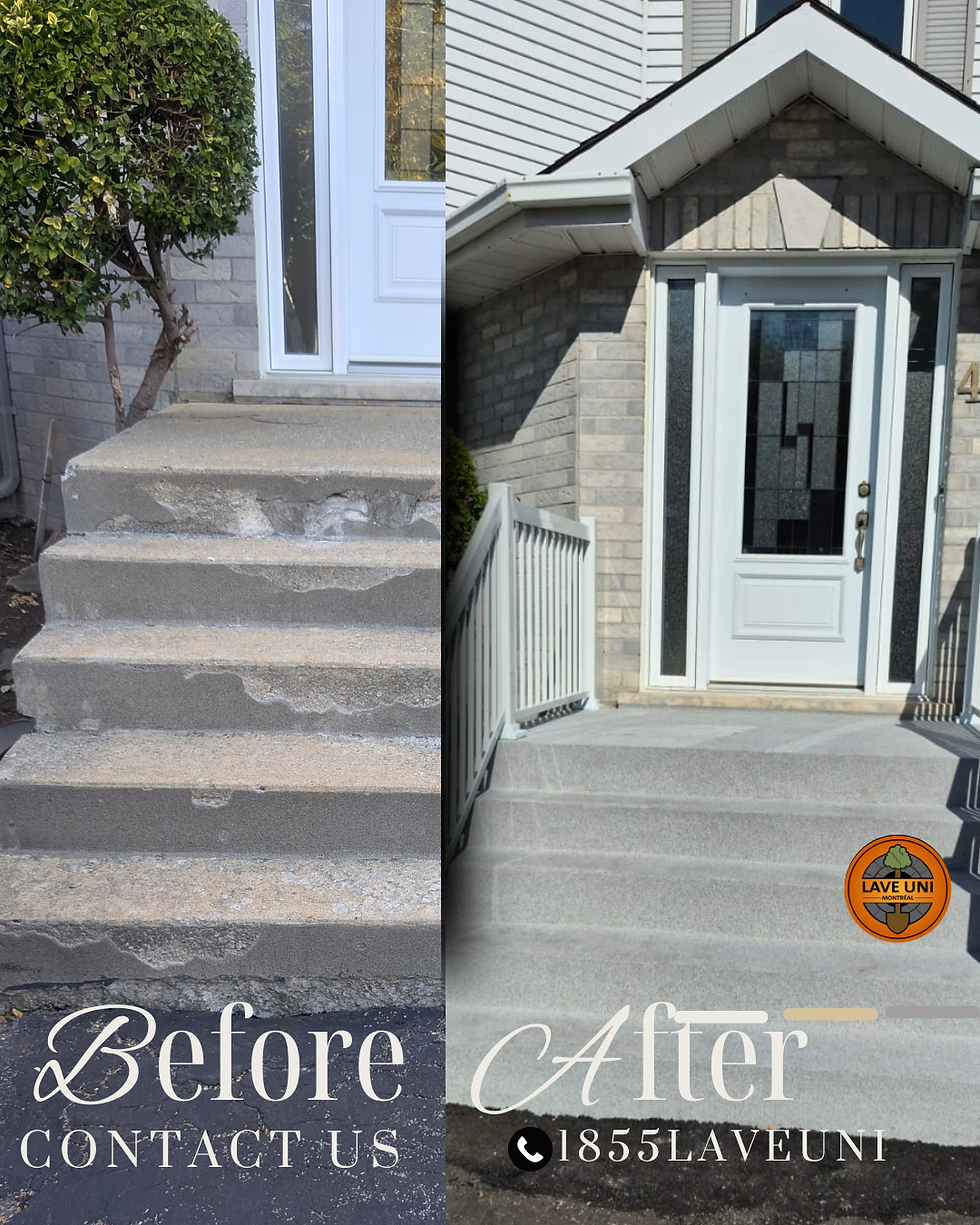
If you are looking for professional assistance to maintain your paved surfaces, our team at Lavé-Uni Montréal is ready to help. We offer expert pressure washing, re-leveling, and joint repair services to restore your pavers to their best condition.
Don’t wait until it’s too late. Contact us today for a free estimate and discover how we can help you keep your pavers in perfect shape.
.


Comments